
IPO Rush Among Developers Reflects Better Governance, But Expansion Must Be Calibrated: Brigade Group's Founder
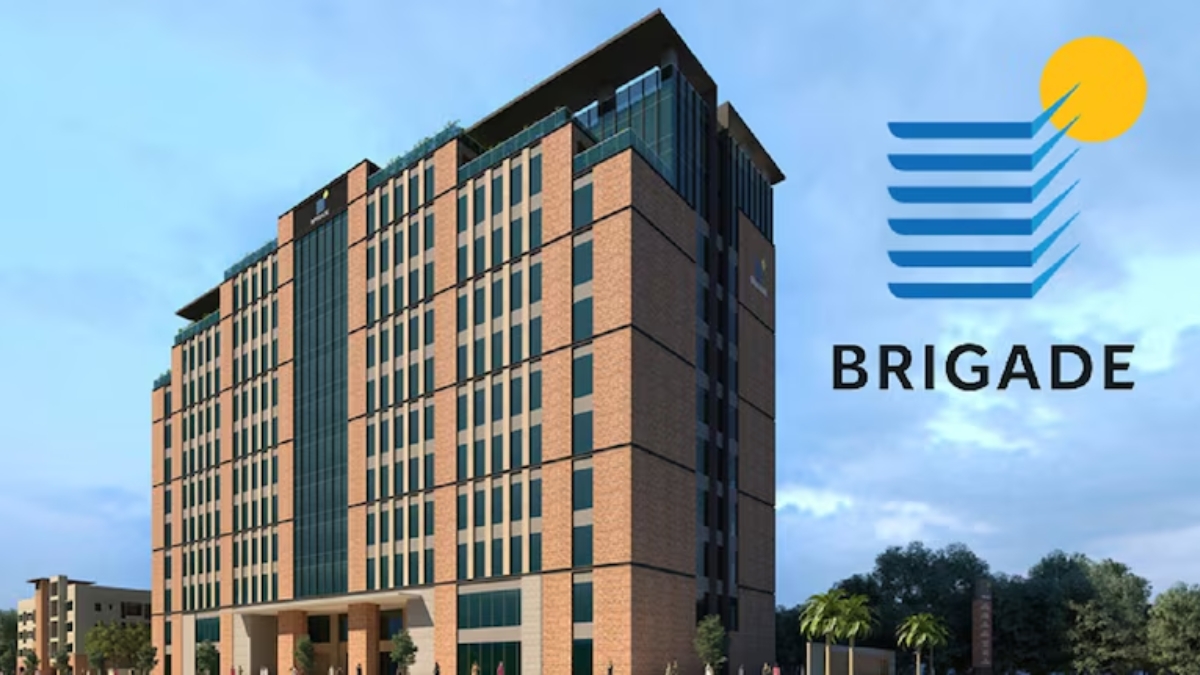
New Delhi, March 12, 2026: India's residential real estate market has seen a strong post-pandemic upcycle, marked by visible premiumisation, improving affordability, and rising buyer aspirations, according to M. R. Jaishankar, founder and executive chairman of Brigade Group. However, he cautions that while premium housing has gained traction, the deepest and most durable demand continues to lie in the mid-income and mass housing segments .
Market Outlook and Demand Dynamics
Jaishankar noted that the real estate market has "really zoomed" after COVID-19, with significant premiumisation across the country. "People who were earlier looking at two-bedroom apartments are now considering three-bedroom homes, and those who wanted three are moving to four," he observed .
He emphasized that affordability in the country has improved as India's economy continues to expand. "With GDP growth, rising incomes and higher disposable income levels, more people will become homebuyers over time. Those who are not customers today can become customers tomorrow. That way, the long-term future for real estate remains promising," he stated .
Cross-Market Expansion and Risks
Regarding expansion beyond Brigade's core south Indian markets into cities like Mumbai and Pune, Jaishankar said the company is at a "serious stage of exploration." He acknowledged the risks of over-expansion, recalling the 2008-09 period when many developers aspired to become pan-India players .
"Real estate remains a very localised business. So one has to tread carefully. I am not saying developers should not expand. We ourselves have expanded to six cities. Others can expand to nine or ten cities if they have the strength. But they must assess their balance sheet, management capability and bandwidth before taking such decisions," he advised .
Jaishankar noted that listed companies face constant pressure for quarter-on-quarter growth, but each company must decide what it can realistically handle without stretching too thin
IPO Activity and Governance
Commenting on the rise in IPO activity among real estate companies, Jaishankar welcomed the trend. "More IPOs indicate that governance standards in the sector are improving. Once a company is listed, there are stronger compliance requirements," he said .
He also highlighted that public capital becomes important for developers wanting to scale up faster, as land values have risen significantly. "Greater access to capital markets is both logical and positive for the sector," he added .
Affordable Housing Concerns
Jaishankar raised serious concerns about the shift toward premium housing, warning that the top end of the pyramid is always narrow, representing only about 10% to 15% of demand. "The real demand lies at the bottom of the pyramid and in the middle-income and high-income housing segments," he emphasized .
He pointed out that the official affordable housing threshold of below ₹45 lakh has become outdated. "With inflation and rising land and construction costs, that threshold should, in my opinion, be at least ₹75 lakh today," he stated .
The industry, including CREDAI, has been requesting the government to revise this, but it has not happened. Jaishankar stressed that for affordable housing to grow meaningfully, the government has a much bigger role to play. "Land for affordable housing has to be made available at affordable rates. Taxes and charges also have to come down," he said .
He noted that levies such as stamp duty, GST, and various civic charges account for 35% to 40% of the value in many middle-income and high-income housing projects, and in affordable housing that share can be even higher .
RERA Review Needed
On the debate about revisiting RERA, Jaishankar agreed that it is certainly time to review the framework. "We support RERA and its objectives, but improvements in rules and processes are welcome so long as they balance both sides. It cannot be entirely one-sided in favour of either the customer or the developer," he said .
He emphasized that developers act as trustees of customers' money, but consumers and authorities should also recognize the hurdles developers face throughout the four-to-five-year development cycle .
Brigade Group's Performance and Targets
Reflecting on FY26, Jaishankar described it as "challenging for us in terms of profitability, but it has been a good year in terms of sales." The main issue was delays in approvals for around half a dozen projects, but as the company moves into the fourth quarter, most of those approvals are falling into place .
Brigade Group's sales target for FY26 was around 8.5 million sq ft, which it will be slightly short of, though profitability remains healthy. For FY27, the company is aiming for sales of around 9 to 10 million sq ft .