
NaMo Bharat 2026: 82 Km Delhi–Meerut RRTS Corridor Cuts Travel Time to 45 Minutes, Transforms Regional Connectivity
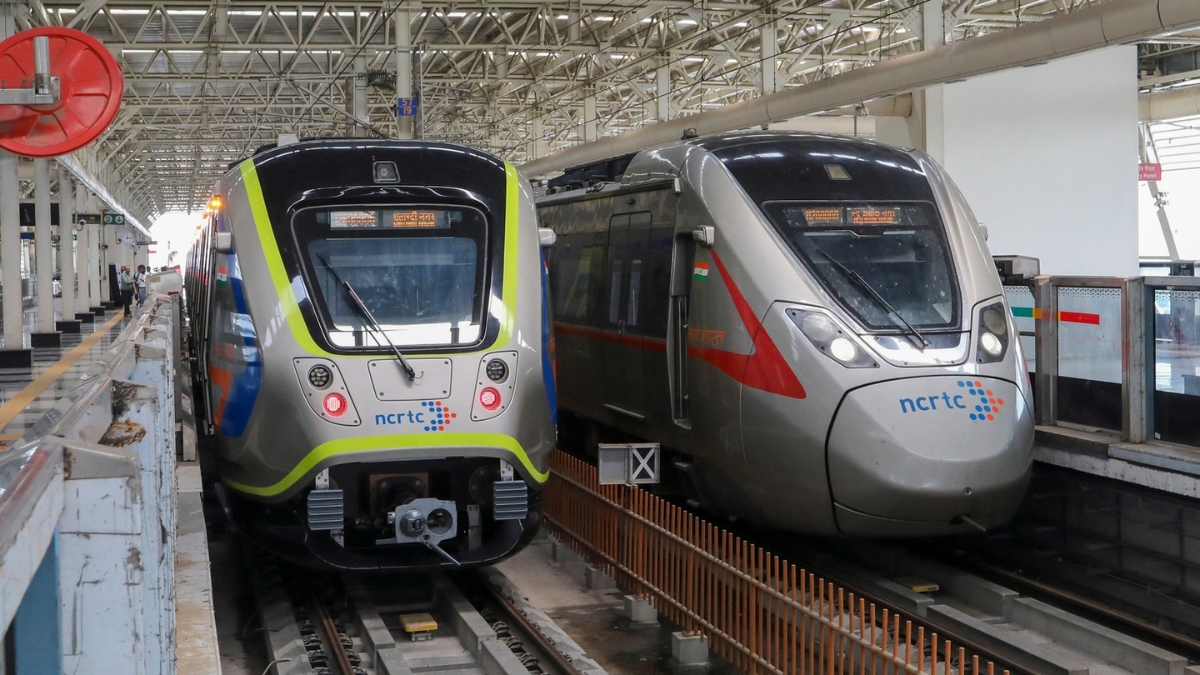
New Delhi, February 23, 2026: The Delhi–Meerut RRTS corridor, developed by the National Capital Region Transport Corporation, has achieved full operational status with the completion of the 82 km stretch on February 22, 2026. Designed as an Electrical Multiple Unit system, the corridor connects Delhi, Ghaziabad, and Meerut with speed, efficiency, and commuter comfort at its core.
Project Overview and Governance
Originally known as RapidX and officially called the Delhi–Ghaziabad–Meerut Corridor, the project is being developed by NCRTC, a joint venture between the Governments of India, Delhi, Haryana, Rajasthan, and Uttar Pradesh. The initiative is aligned with the Make in India programme, with train design undertaken in Hyderabad and manufacturing carried out in Savli, Gujarat.
The corridor became operational in phases. The 17 km priority stretch between Sahibabad and Duhai Depot was inaugurated on October 21, 2023. On January 5, 2025, Prime Minister Narendra Modi inaugurated the 13 km extension from Sahibabad to New Ashok Nagar, marking the system's formal entry into Delhi. The final phase of the full 82 km stretch began on February 22, 2026, although extension work between Jangpura and Sarai Kale Khan remains underway.
Route, Stations and Connectivity
The corridor consists of 22 stations, excluding two depots at Duhai and Modipuram. Key stations include Sarai Kale Khan–Nizamuddin, New Ashok Nagar, Anand Vihar, Sahibabad, Ghaziabad, Guldhar, Duhai, Murad Nagar, Modi Nagar South and North, Meerut South, Partapur, Rithani, Shatabdi Nagar, Brahmapuri, Meerut Central, Bhaisali, Begumpul, MES Colony, Daurli, Meerut North, and Modipuram.
Among these, Anand Vihar, Meerut Central, Bhaisali, and Begumpul are underground stations, forming part of the 11.5 km underground stretch. The remaining stations are elevated. Sarai Kale Khan connects with the Delhi Metro Pink Line and provides access to Hazrat Nizamuddin Railway Station and the ISBT. Anand Vihar integrates with both the Pink and Blue Lines, along with the railway terminal and ISBT. New Ashok Nagar, Anand Vihar, and Sahibabad stations connect to the Delhi Metro Blue Line, ensuring seamless multimodal travel.
Timings and Fare Structure
NaMo Bharat services operate daily between 6:00 AM and 10:00 PM. Trains from Modipuram to Sarai Kale Khan start at 6:01 AM, while the return service begins at 6:00 AM. Within Meerut city limits, the local Meerut Metro operates on the same corridor under a "one track, two services" model between 6:00 AM and 10:00 PM.
The fare from New Ashok Nagar to Meerut South ranges from ₹20 to ₹150 in Standard Class, and ₹30 to ₹225 in Premium Class depending on distance. On the 17 km priority section between Sahibabad and Duhai Depot, Standard Class fares range from ₹20 to ₹50, while Premium Class fares range between ₹40 and ₹100. Premium coaches, positioned at the front of each train, offer reclining cushioned seats, charging ports, magazine holders, sun blinds, and enhanced comfort features.
Technology and Design
The corridor uses 25 kV, 50 Hz AC electrification with overhead catenary. Signalling is based on European Train Control System Level 2 under ERTMS standards, allowing Automatic Train Operation even during heavy fog or smog conditions. The 6.5-metre tunnel diameter supports design speeds up to 180 kmph, while operational average speed is approximately 100 kmph.
Each train includes one Premium coach and one women's coach. Features include platform screen doors, luggage racks, ergonomic grab handles, onboard Wi-Fi, CCTV surveillance, wheelchair and stretcher space, auto lighting control, and charging points.
Ticketing and Digital Integration
Passengers can purchase QR-based digital tickets via the RRTS Connect mobile application. The National Common Mobility Card is also accepted, with recharge limits between ₹100 and ₹2,000. Ticket vending machines are installed at priority stations, with four each at Sahibabad and Ghaziabad, and two each at Guldhar, Duhai, and Duhai Depot.
Integrated ticketing between NCRTC and Delhi Metro Rail Corporation enables booking through both RRTS Connect and DMRC Momentum 2.0 apps under the One India–One Ticket initiative. The app provides real-time train tracking, estimated arrival times, weekly timetables, payment through UPI or cards, feeder bus information, parking details, and station amenities.
Funding and Expansion
The project received 20% funding from the Government of India, 3.22% from Delhi, and 16.78% from Uttar Pradesh. Multilateral agencies contributed significantly, including USD 1 billion from the Asian Development Bank, USD 500 million from the New Development Bank, and USD 500 million from the Asian Infrastructure Investment Bank.
A 72.26 km RapidX-cum-metro corridor from Ghaziabad to Noida Airport in Jewar is under DPR preparation. The initial phase proposes 25 stations, integrating metro and rapid services.
Impact on Ridership and Real Estate
Daily ridership crossed 35,000 passengers in March 2025 and continues to grow. The corridor is expected to handle up to 8 lakh commuters daily in the long term. Property values within 2 km of stations have reportedly risen 20 to 50% over two years. A proposed 750-acre township in Partapur further reflects the corridor's real estate potential, cementing the RRTS as a catalyst for regional development.