
Luxury Housing Drives Bulk of Residential Sales in India's Top Cities
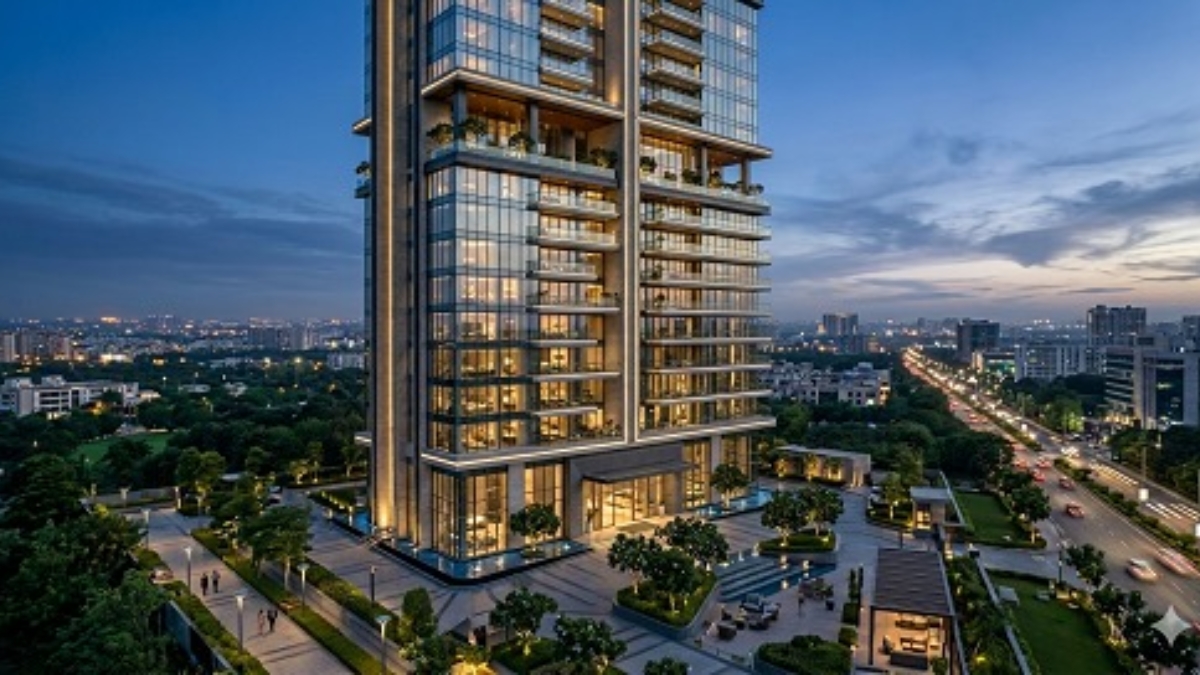
Delhi NCR, March 31: The center of gravity in India's residential real estate market has quietly shifted upward. In certain pockets of Gurugram, experts speak of ₹8-10 crore transactions with the same casual manner that ₹2 crore units commanded not very long ago. The mid-market has not disappeared, but it has stopped setting the tone.
Luxury Segment Dominates Sales
According to JLL India, homes priced above ₹1 crore accounted for nearly 63 per cent of total residential sales value in 2025, up from about 53 per cent in 2024. Total residential sales value across top cities has edged past ₹6 lakh crore.
Wealth Creation Driving Demand
Knight Frank India attributes this trend to the steady expansion of India's high-net-worth population. IPO activity alone raised over $19 billion across more than 100 companies in 2025, creating a fresh layer of liquidity that is not particularly price-sensitive in residential decisions.
Developer Perspectives
Arjun Gehlot, Director at Ambience Group, said: "Luxury housing is increasingly driving residential sales across India's top cities, led by a clear shift in buyer priorities. At the top end, brand credibility has become non-negotiable. Buyers are aligning with developers who can deliver consistently, while also evaluating financial strength, execution track record, and long-term design quality."
Mohit Gawri, VP at Rise Infraventures Limited, noted: "From an investment standpoint, luxury housing is offering more predictable value retention. That is attracting a different class of investor, one that is less speculative and more strategic. Infrastructure has helped. As a result, the early movers, mostly investors, have been followed by the end-users."
Ashok Singh Jaunapuria, MD & CEO of SS Group, observed: "There is a subtle shift even in the luxury segment. The earlier luxury buyer, status-conscious, location-fixated, has been replaced by someone far more evaluative. The conversation has moved from pin codes to product, reflecting a deeper change in buyer priorities. It is less about owning a home and more about owning a certain quality of living."
City-Wise Trends
In Mumbai, the gravitational pull of established luxury micro-markets remains intact, but pricing has reached a point where demand is incremental and selective.
Gurugram has been growing significantly. JLL's estimates suggest that ₹10 crore-plus home sales in the city crossed ₹24,000 crore in 2025, putting it ahead of Mumbai in that bracket. Bengaluru and Hyderabad are also witnessing significant growth.
Tier-2 Markets Catching Up
Udit Jain, Director at One Group, said: "The premiumisation we are seeing is not restricted to metros anymore. In markets like Mohali, there is a growing segment of buyers willing to invest in better-designed, higher-value homes, provided the ecosystem, schools, healthcare, and connectivity keep pace. These buyers are comparing product quality, amenities, and planning standards with developments in larger cities, which is gradually raising the bar for developers operating in Tier 2 markets."
Changing Buyer Priorities
Karan Malik, Regional Director at Realistic Realtors, noted: "In the last few years, the definition of 'adequate space' has been permanently altered. A 3BHK is no longer a default upgrade; it is often a compromise. Projects all over the country are reporting stronger traction for larger configurations. The expectation levels have risen, and buyers are comparing products across cities, not just within them."