
Supreme Court Slams CBI Over Builder-Bank Nexus Probe, Threatens Monitoring Committee: "Be Fair to Homebuyers"
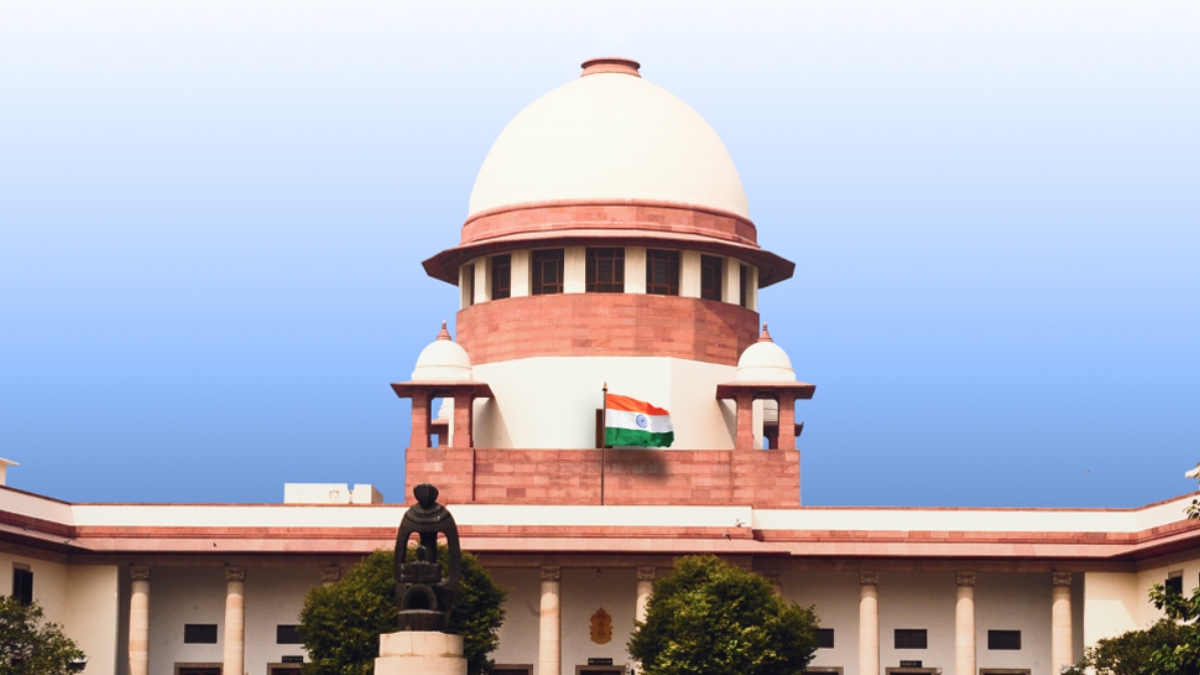
New Delhi, March 12, 2026: The Supreme Court on Wednesday pulled up the Central Bureau of Investigation for its probe into the alleged "unholy nexus" between banks and builders that has defrauded thousands of homebuyers under subvention schemes, warning that it may constitute a monitoring committee headed by a former judge to oversee the investigations if the agency's approach does not improve .
A bench headed by Chief Justice Surya Kant, also comprising Justices Joymalya Bagchi and Vipul M Pancholi, expressed strong displeasure over the CBI's reluctance to take up fresh cases and its filing of charge sheets without custodially interrogating bank officials .
Court's Strong Observations
"Going by the way in which the investigation is proceeding, we will have to constitute a monitoring committee headed by a former judge to oversee these investigations. We will not allow the CBI to disappoint millions of homebuyers, as they are now doing," the bench stated while hearing a batch of petitions filed by homebuyers affected by the subvention scheme .
The court emphasized that prolonging investigations would only add to the suffering of homebuyers. "This court cannot wait for an indefinite period for the conclusion of the investigation. Delay or prolonging of the investigation will only lead to more agony for the homebuyers who have already been harassed by the builders and developers, apparently in collusion and connivance with financial institutions and banks," the bench observed .
CBI's Reluctance Rejected
The CBI, represented by Additional Solicitor General Aishwarya Bhati, informed the court that of 44 fresh petitions filed by homebuyers, it was willing to probe 20 while suggesting that 22 cases be referred to the Economic Offences Wings of the states where the projects are located .
The bench strongly disapproved of this stand. "CBI seemingly wants to wriggle out of its responsibility given by the court by suggesting that the cases be handed over to the concerned EOWs. We disapprove of such a stand," the court said .
"If state police was so fair and prompt they would have carried out an investigation so far. We want you to be fair to the homebuyers. Take up these cases and whatever logistical help you need from the states, we will provide you," the bench directed .
Bank Officials Not Investigated
The court also took serious note that while charge sheets had been filed in some cases, there was nothing to show that bank officials had been examined in custody. "How have you filed a charge sheet without subjecting bank officials to custodial interrogation? If in these matters they are not caught, this investigation will again lead to an eyewash," the bench remarked .
Bhati stated she did not have clear instructions on whether bank officials had been subjected to custodial interrogation. The court recorded that "as of now, we do not want to comment on the quality, depth and investigation skills in the ongoing investigation", but reminded the agency that "nobody should be treated above law" and that all persons involved must be examined to get to the bottom of the matter .
Background of the Subvention Scheme Fraud
The cases relate to the subvention scheme—a tripartite agreement between builders, homebuyers and banks under which lenders release loans directly to builders, who undertake to pay the EMIs until a specified cut-off date or until possession of the flat is handed over. However, after builders defaulted on EMI payments, banks began demanding payments from homebuyers despite possession not being delivered .
The amicus curiae's report revealed that Supertech Limited alone secured loans of approximately ₹5,158 crore since 1998 through such arrangements, with Corporation Bank advancing more than ₹2,700 crore to builders under subvention schemes .
Timeline and Scope of Probe
The CBI is currently probing 28 cases involving 39 housing projects and 17 financial institutions, with projects located in Noida, Greater Noida, Yamuna Expressway, Gurugram and Ghaziabad. Several petitions relate to projects of the Supertech group across the country .
In September 2025, the apex court allowed the CBI to register six more regular cases into the builder-bank nexus in real estate projects in Mumbai, Bengaluru, Kolkata, Mohali and Prayagraj. Two months prior to that, the court had permitted registration of 22 cases in which homebuyers were duped in the National Capital Region through the subvention scheme .
Directions Issued
The court directed the CBI to register regular cases in all 42 matters within a week and permitted the agency to seek assistance from Directors General of Police of the concerned states for officers from the EOW. The court mandated that DGPs provide officers with the required expertise within a week of such request .
The bench also directed a senior CBI officer to file an affidavit before the next hearing explaining how the nexus aspect has been examined in the investigation so far. "Ultimately, it is the country's money which has been siphoned off. The banks would offer a one-time settlement but where has the rest of the money gone?" the court asked .
All affected parties—including homebuyers, banks and builders—have been given liberty to submit their claims, suggestions and recommendations to the amicus curiae, who will examine them and place appropriate material before the court. The court clarified that no claims would be directly entertained unless screened through the amicus .