
Line 4A Metro Extension: 2.88 km to Connect Kasarvadavali to Gaimukh Seamlessly as Part of Mumbai's Green Line Corridor
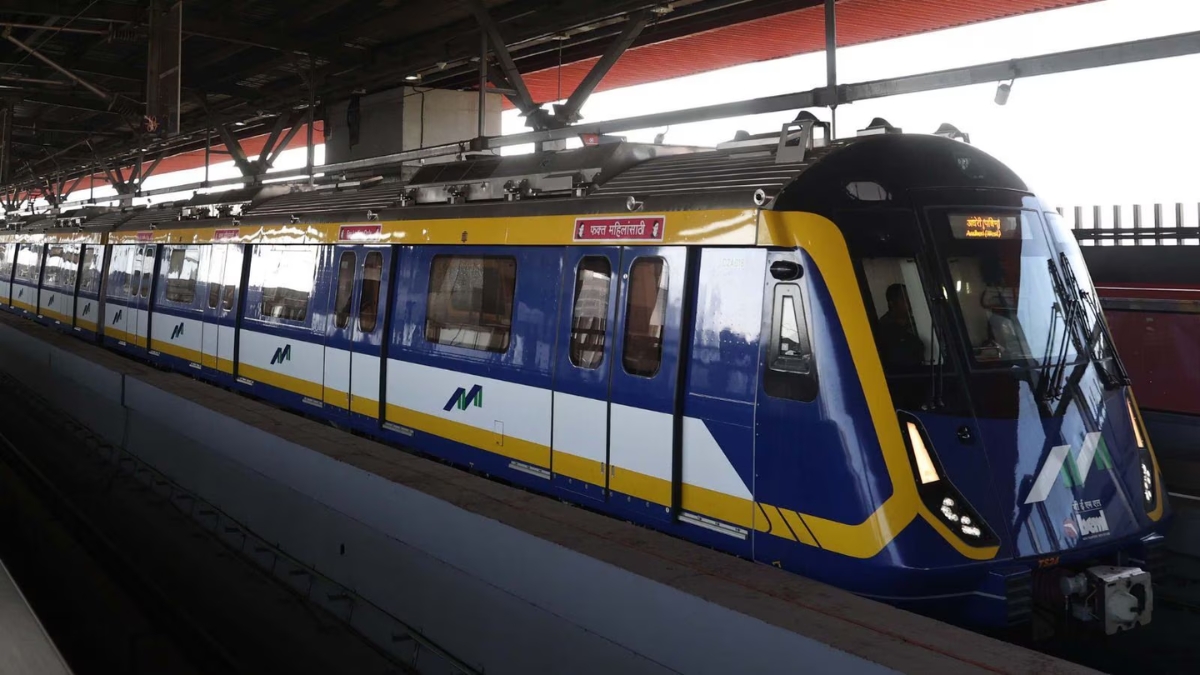
Mumbai, March 10, 2026: Mumbai's urban transportation network is witnessing a transformative leap with the Green Line Metro project, spearheaded by the Mumbai Metropolitan Region Development Authority. This ambitious initiative, comprising Lines 4, 4A, 10, and 11, is set to redefine commuting across Mumbai and its neighbouring Thane region, providing faster, safer, and more convenient travel options for thousands of daily passengers .
Project Overview
Spanning 57.18 km, the Green Line Metro is primarily elevated and will connect critical nodes, including Shivaji Chowk in Mira Road, Gaimukh, Kasarvadavali, Wadala, and CST. The project, featuring 48 stations, is designed to reduce travel time significantly while enhancing access to the city's commercial, residential, and educational hubs. Maharashtra's cabinet approved the Line 4 corridor in 2016, and Prime Minister Narendra Modi laid the foundation stone later that year .
Line 4A Extension Details
Line 4A extends 2.88 km north from Kasarvadavali to Gaimukh and includes elevated stations at Gowniwada and Gaimukh, along with a 20-hectare metro car depot at Mogharpada. Together, Lines 4 and 4A form a 35.25 km corridor with 32 stations and five interchanges, making it the longest in the Mumbai Metropolitan Region .
Project Segmentation
The Green Line Metro's construction is organised into five packages under the Engineering, Procurement, and Construction model :
-
Line 4: Wadala to Kasarvadavali (32 km, 32 stations)
-
Line 4A: Kasarvadavali to Gaimukh (2.88 km)
-
Line 10: Gaimukh to Shivaji Chowk (9.2 km)
-
Line 11: Bandra Terminus to SPM Chowk (23.4 km underground)
Three packages, valued at ₹1,584 crores, were awarded to a joint venture of Reliance Infrastructure and Astaldi S.p.A., covering 32.32 km along LBS Marg and the Eastern Express Highway, connecting Wadala to Kasarvadavali. The remaining two packages, worth ₹1,048 crores, were assigned to Tata Projects Limited in collaboration with China Harbour Engineering Company .
Progress and Timeline
Trial runs are currently underway on a 10.5 km section from Cadbury Junction to Gaimukh, with approvals from the Commissioner of Metro Rail Safety expected soon. Officials aim to open this section to the public by December 2025, while the entire Line 4 corridor is projected to be operational by August 2026 .
Line 10, spanning 9.2 km from Gaimukh to Shivaji Chowk, runs parallel to the Thane-Bhayandar Highway and links with Line 9 at Chhatrapati Shivaji Maharaj Chowk. It is expected to cut travel time between Mira-Bhayander, Thane, Borivali, and Mumbai by up to 75% .
Line 11 has been redesigned as a fully underground 23.4 km corridor from Bandra Terminus to SPM Chowk near the Gateway of India. It will include interchanges with Lines 3 and 4 and support Dharavi redevelopment, with a projected daily ridership of nearly 6 lakh by 2031. Advanced tunnelling methods, such as NATM and TBMs, are being used to protect heritage structures while minimising disruption to the cityscape .
Modern Facilities and Features
The Green Line Metro prioritises commuter convenience with:
-
Maximum speed of 80 km/h, average speed 34 km/h
-
Standard gauge tracks (1435 mm) powered by 25 kV AC
-
CBTC signalling for precise train operation
-
Amenities like elevators, escalators, ramps, first aid stations, washrooms, water coolers, PID, customer care, and F&B options
-
NFC and QR code-enabled automatic fare collection
Strategic Connectivity and Local Impact
Stations are strategically located near schools, hospitals, markets, and residential complexes. Kasarvadavali, for instance, is close to Cambridge International Preschool, Hiranandani Hospital, and Brahmand Multispeciality Hospital .
Residential projects along the corridor, including Ashok Smruti, Horizon Heights, and Pristine Towers, offer property rates from ₹7,500 to ₹11,700 per sq ft. Commercial hubs in Mulund, like Runwal Commercial Complex and Centre Point Mulund, are expected to see enhanced business activity due to metro accessibility .
Transforming Mumbai's Commuting Experience
The Green Line Metro is more than a transport project; it is a catalyst for urban development, improving mobility, reducing traffic congestion, and boosting economic connectivity. With modern facilities, well-planned interchanges, and efficient travel, it promises a comfortable and reliable commuting experience, transforming the way Mumbaikars navigate the city .