
Amravati Mandates Cool Roofs for New Buildings to Beat Extreme Heat
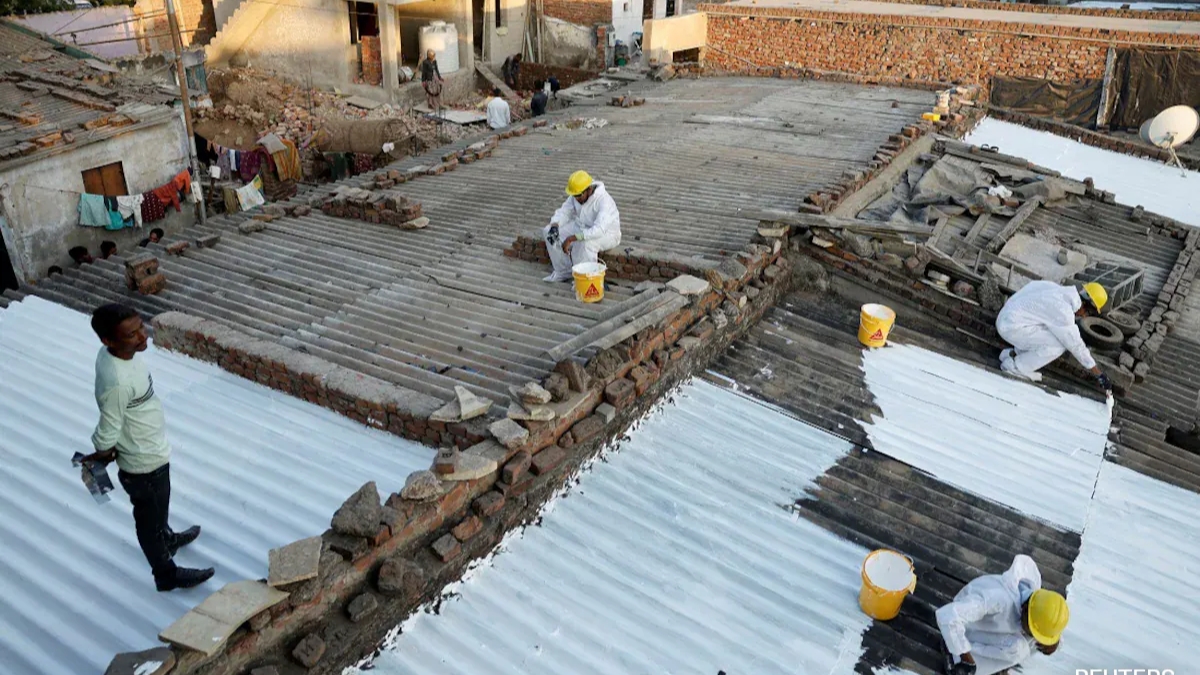
Amravati, March 28: In a decisive move to counter extreme heat and reduce soaring energy demand, the Amravati Municipal Corporation (AMC) has made cool roofs mandatory for new buildings and rolled out property tax rebates for existing structures that adopt the technology. The Cool Roof Bylaws 2025 were introduced under the state government's 150-day governance programme.
What is a Cool Roof?
A cool roof uses materials such as specialized reflective paints, tiles, or thermal membranes with a high Solar Reflectance Index (SRI) , enabling the surface to reflect more sunlight and absorb less heat than conventional roofs. Studies show cool roofs can reduce:
-
Peak ambient temperatures by approximately 2.3°C
-
Surface temperatures by up to 6.1°C
Key Provisions of the Bylaws
Mandatory for New Buildings
Cool roofs are now compulsory for:
-
All new government, commercial, and public buildings
-
Residential and mixed-use structures exceeding 500 sq m or 15 meters in height
Enforcement
-
Compliance enforced at building plan approval stage
-
Verified during site inspections before Occupancy Certificate issuance
-
Applies to all municipal construction tenders
Tax Incentives for Existing Buildings
To encourage retrofitting:
-
Residential and public buildings: Up to 10% property tax rebate
-
Commercial properties: Up to 5% property tax rebate
-
Rebate valid for three years after certification
Digital Portal
A dedicated digital portal handles application, verification, and certification. Approved buildings receive a "Climate Resilient Cool Roof Certificate" with QR-based verification.
Why This Matters: The Heat Crisis
A 2024 remote sensing-based Land Surface Temperature (LST) study revealed alarming heat levels in Amravati:
-
Peak temperatures reached 53.7°C in dense urban pockets
-
Metal-roofed structures consistently exceeded 47°C
Saumya Sharma Chandak, Municipal Commissioner, attributed the trend to:
-
Rapid urbanization
-
High building density
-
Increasing concretisation
These factors have intensified the urban heat island effect, raised cooling demand, and heightened public health risks.
Alignment with Broader Initiatives
The policy integrates heat mitigation into urban planning and aligns with:
-
Majhi Vasundhara Abhiyan
-
National sustainable cooling efforts
-
C40 Cities climate resilience initiatives
Government's Statement
"This marks a shift from reactive measures to integrating heat mitigation into core planning frameworks," said Municipal Commissioner Saumya Sharma Chandak.
Citing studies conducted with C40 Cities, she noted that cool roofs can significantly lower indoor temperatures and improve thermal comfort during peak summer.
Monitoring and Evaluation
AMC plans a follow-up LST assessment in 2027 to evaluate the impact of the intervention against baseline data.