
Telangana Outlines Bharat Future City: 30,000-Acre Sustainable Urban Cluster Planned for Up to 30 Lakh Residents
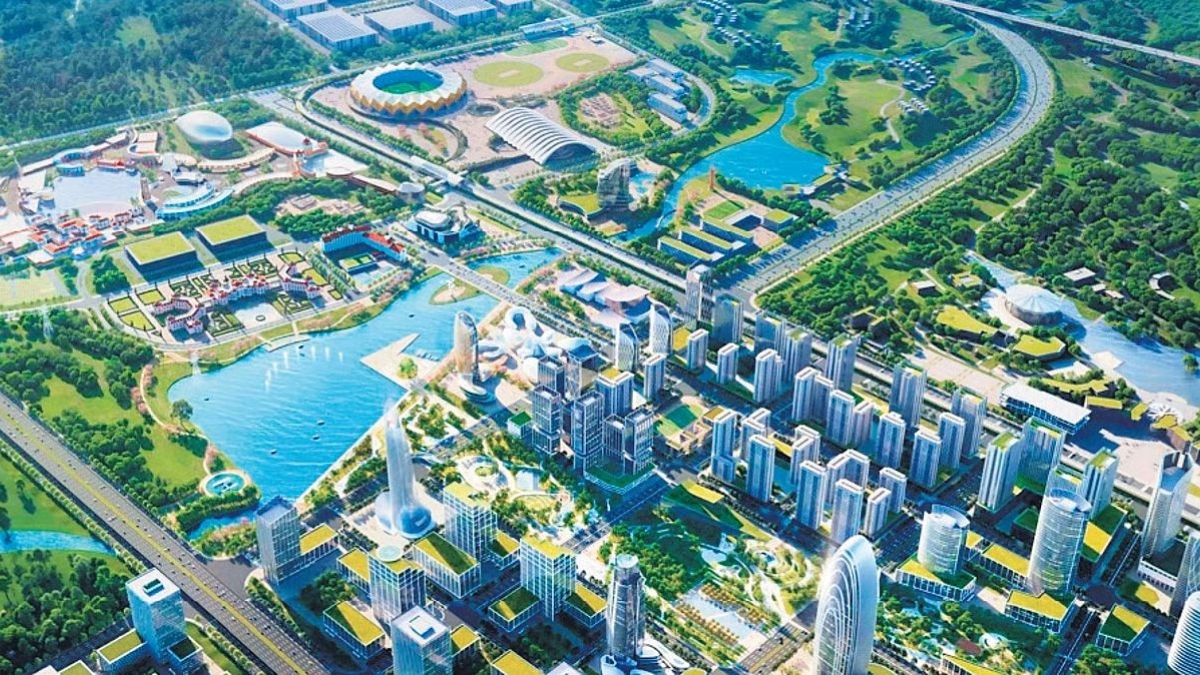
Hyderabad, March 25: The Telangana government has unveiled comprehensive plans for Bharat Future City, a large-scale greenfield urban development near Hyderabad, as outlined in the state's recent socio-economic survey. The project, envisioned as a sustainable and transit-oriented urban cluster, is expected to accommodate between 25 lakh and 30 lakh residents across a core area of 30,000 acres.
The development represents a significant step in Telangana's long-term strategy to expand Hyderabad's urban footprint and distribute economic activity across new growth corridors, positioning the region for sustained growth in the coming decades.
Master Plan and Specialized Economic Zones
The master plan for Bharat Future City is structured around a central business district supported by four primary economic clusters, each designed to attract investment and create employment opportunities within the development.
-
AI City: A 300-acre hub dedicated to artificial intelligence and emerging technologies
-
Health City: A 200-acre zone focused on healthcare services and medical innovation
-
Education Hub: A 500-acre cluster for educational institutions and research centers
-
Life Sciences Zone: A 3,000-acre area for biotechnology, pharmaceuticals, and related industries
These specialized zones are intended to function as economic anchors within the larger development, supported by advanced urban systems such as district cooling and integrated service networks. The project is being planned between the Srisailam and Nagarjunasagar highway corridors, providing strategic connectivity to existing infrastructure.
Infrastructure Planning and Connectivity
Infrastructure development forms a central pillar of the proposal. The government has outlined several key infrastructure initiatives to support the new city:
-
Radial road networks to ensure seamless connectivity within the development and to surrounding regions
-
A greenfield national highway connecting the city to Machilipatnam port, enhancing logistics and trade connectivity
-
Underground power distribution systems and smart grid infrastructure for reliable and efficient energy management
-
Metro connectivity and multimodal transport systems to support transit-oriented development
-
Transit-oriented development principles to reduce travel demand and promote higher-density urban planning around transport hubs
Environmental Planning and Net-Zero Commitment
Bharat Future City is being positioned as a net-zero urban cluster, with strong emphasis on environmental sustainability. Key environmental features include:
-
A proposed 15,000-acre reserve forest adjoining the Rajiv Gandhi Zoological Park, creating a significant green buffer
-
A commitment to maintain over 50 per cent of the project area as green cover
-
Integration of renewable energy sources for power generation
-
Use of sustainable construction practices to reduce carbon emissions
These measures reflect the state's intention to balance urban expansion with environmental planning, creating a development model that prioritizes ecological responsibility alongside economic growth.
15-Minute Living Model and Urban Design
The planning framework for Bharat Future City follows the work, live, learn and play model, combined with a 15-minute city concept. This approach is designed to integrate residential and employment zones within accessible distances, reducing commute times and enhancing quality of life for residents.
Under this model, residents would have access to essential services, workplaces, educational institutions, and recreational facilities within a 15-minute walk or cycle from their homes. This urban design principle supports reduced vehicular dependency, lower emissions, and enhanced community living.
Additional Components and Workforce Development
The project also includes plans for an entertainment district featuring sports and tourism infrastructure, adding to the city's appeal as a comprehensive urban destination. Additionally, a skill university is proposed to develop a workforce aligned with the project's economic focus areas, ensuring that local talent meets the demands of the specialized zones.
Governance and Implementation
Bharat Future City will be governed by a dedicated development authority overseeing multiple mandals and villages within the project's influence zone. The broader development region extends well beyond the 30,000-acre core area, with the project forming part of Telangana's long-term urban expansion strategy.
The state government has already initiated investor outreach through global summits and policy initiatives to attract domestic and international participation in the project. With ongoing land aggregation and infrastructure planning, Bharat Future City is positioned as a long-term urban expansion initiative, with execution timelines and phased development expected to shape its progress over the coming years.
Outlook
Bharat Future City represents one of India's most ambitious greenfield urban development projects, combining large-scale infrastructure investment with sustainability commitments and specialized economic zones. As Hyderabad continues to grow as a major economic hub, the new city is expected to relieve pressure on existing urban infrastructure while creating new opportunities for investment, employment, and sustainable urban living.